

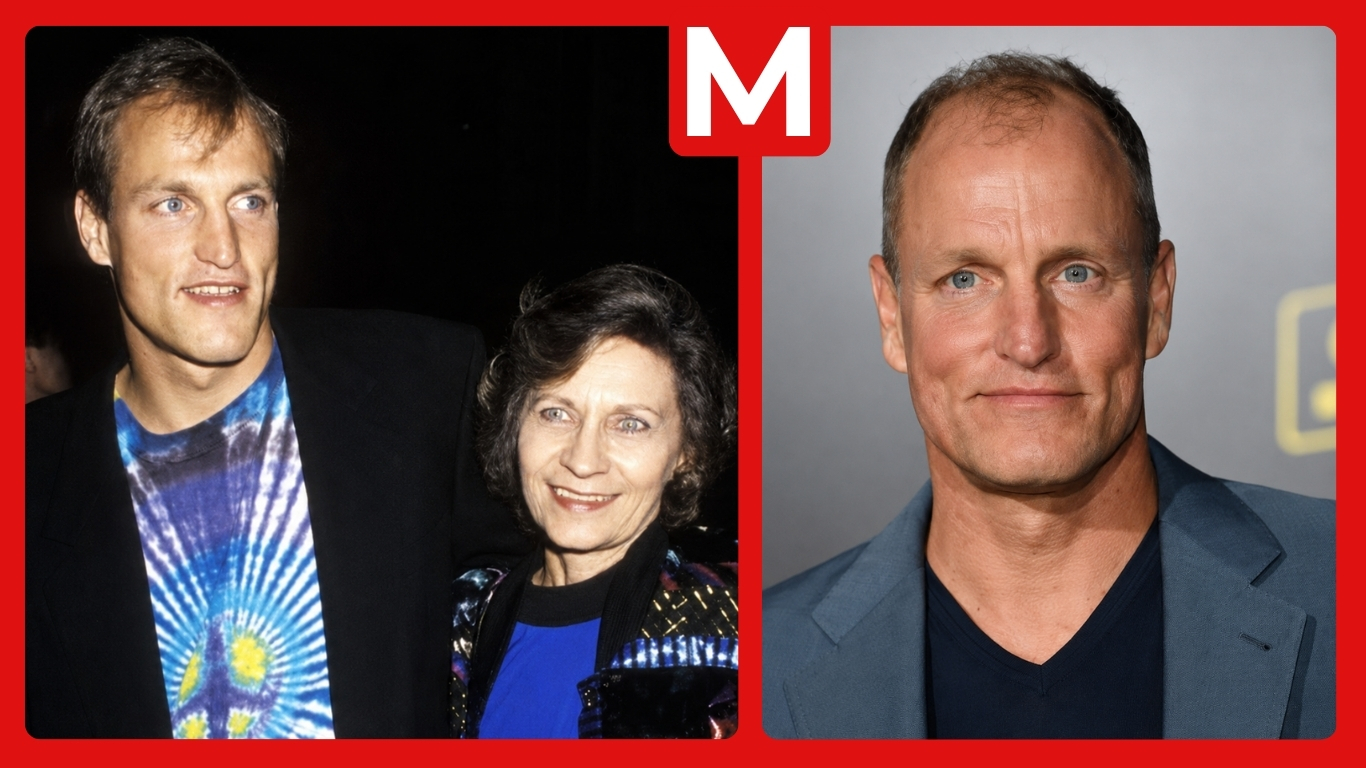
When exploring the fascinating history behind one of Hollywood’s most beloved eccentric actors, many people find themselves asking, who is Diane Lou Oswald? While her son Woody Harrelson commands the silver screen with his charismatic energy and effortless charm, the woman who shaped his reality lived a life defined by quiet endurance, deep spiritual faith, and a relentless struggle against overwhelming odds. Her name stands at a bizarre intersection of cinematic fame and dark American true crime, acting as the protective buffer between her children and a chaotic legacy that easily could have consumed them.
To understand the trajectory of the Harrelson family, one must look closely at the woman who refused to let her circumstances dictate her children’s destiny. Left completely abandoned by a husband whose hidden double life would later shock the entire nation, she quietly engineered a sanctuary of stability for her three young boys. Her story is not just a footnote in a celebrity biography; it is a profound masterclass in single motherhood, resilience, and the sheer power of parental devotion. By shifting the lens away from Hollywood headlines, we reveal a gripping narrative of a woman who conquered generational trauma through sheer, unwavering willpower.
Early Life and Midwestern Roots of Diane Lou Oswald
Long before she was thrust into a world of complex family dynamics and public scrutiny, Diane Lou Oswald was raised in the serene, grounded landscape of the American Midwest. Born in Ohio to her parents, Kenneth Earl Oswald and Mary Lou Lauterwasser, she grew up during an era that deeply valued community, integrity, and traditional family structures. Her upbringing was heavily influenced by the modest, hardworking ethos of mid-20th-century Ohio, establishing a deep internal moral compass that would serve as her ultimate anchor during the turbulent decades that followed.
The stability of her early life provided her with a firm psychological foundation. Surrounded by an extended family that emphasized personal responsibility and a strict adherence to their religious faith, she developed a quiet but unyielding strength. This traditional environment instilled in her a profound sense of duty and grace, traits that defined her character long before she ever encountered the hardships of her adult years. It was this exact midwestern resilience that she would later draw upon when forced to rebuild her life from scratch.
The Texas Marriage: Meeting Charles Voyde Harrelson
In the late 1950s, the economic promise of the Texas oil boom was drawing thousands of ambitious young individuals down south, and Diane’s path eventually led her to Midland, Texas. It was here that she crossed paths with Charles Voyde Harrelson, a smooth-talking, highly charismatic man whose charm masked a deeply fractured and unstable personality. Drawn to his magnetic presence, she married Charles in 1959, hopeful that they would build a prosperous, conventional life together amidst the rapidly expanding energy landscape of the Lone Star State.
Within a remarkably short span of four years, the young couple welcomed three sons into the world: Jordan Kenneth, Woodrow Tracy, and Brett Voyde. Life as a young mother to three energetic boys in a bustling Texas town was demanding, but Diane threw herself into the role with total devotion. However, beneath the surface of their domestic life, the cracks in her marriage were widening at an alarming rate, as Charles’s behavior became increasingly unreliable, erratic, and defined by long, unexplained absences from the family home.
A Brave Choice: The 1964 Divorce and Financial Abandonment
By 1964, the volatile reality of her domestic situation had become entirely unsustainable for the young mother. Charles was a compulsive gambler who consistently mismanaged money, leaving the family exposed to constant financial insecurity while offering very little emotional support. Recognizing that the toxic environment was poses a direct threat to the safety and well-being of her three toddlers, Diane made the incredibly brave and definitive choice to file for divorce, cutting ties with a man who had become a ghost in his own home.
The immediate aftermath of the divorce was an period of intense hardship and near-total isolation for Diane Lou Oswald. Left with three boys who were all under the age of four, she received virtually no financial support or alimony from her ex-husband, who effectively vanished from their day-to-day lives. In an era when single motherhood carried a heavy social stigma and minimal systemic support, she found herself completely alone in Texas, entirely responsible for keeping a roof over her children’s heads and food on their table.
Under a Dark Shadow: Discovering the Truth About Charles Harrelson
As the years progressed, the true, horrifying nature of Charles Harrelson’s long absences and secret life slowly began to unravel in the public eye. Unbeknownst to Diane during their brief marriage, her ex-husband had evolved from a petty criminal into a ruthless, professional contract killer for organized crime syndicates. The dark reality hit a national flashpoint when Charles was implicated and eventually convicted for the shocking 1979 assassination of U.S. District Judge John H. Wood Jr., a crime that earned him two consecutive life sentences in a maximum-security supermax prison.
Faced with the terrifying reality of her children’s paternal lineage, Diane Lou Oswald made the conscious, ironclad decision to insulate her sons from the media circus and toxic stigma surrounding their father. She rarely spoke of his dark deeds in the household, actively choosing to focus their collective energy on the future rather than the grim realities of the past. By creating an intentional wall of silence around Charles’s criminal trial, she ensured that her boys were judged by their own actions rather than the sins of their father.
Raising Three Sons Solo: Diane Lou Oswald as a Legal Secretary
To maintain financial survival and provide a respectable life for her boys, Diane utilized her sharp organizational skills and entered the workforce as a legal secretary. The irony of working within the legal system while her ex-husband consistently shattered it was not lost on her, yet she performed her demanding duties with absolute professionalism. She worked grueling, exhaustive hours in fast-paced law offices, sacrificing her own personal comfort to ensure her sons had access to a stable, predictable routine.
Realizing that Texas held too many heavy memories and lacked the safety net her growing boys required, Diane made another monumental pivot in 1973. She packed up her family’s meager belongings and relocated back to her native hometown of Lebanon, Ohio. Returning to her roots allowed her to immerse her sons in the warmth of an extended family network, surrounding them with uncles, aunts, and grandparents who could provide the positive male role models and emotional reinforcement that her boys desperately needed.
Faith and Discipline: The Core Pillars of the Oswald Household
In Lebanon, Ohio, the household managed by Diane Lou Oswald was governed by two non-negotiable principles: deep Presbyterian faith and structured personal discipline. She integrated her family into the local church community, utilizing the spiritual framework to instill values of humility, forgiveness, and integrity within her sons. The church wasn’t just a weekend obligation; it was a sanctuary where her boys learned to ground themselves against the judgment of the outside world.
She balanced this spiritual guidance with a firm, pragmatic approach to household rules and academic focus. Understanding that idle time could lead young boys astray, especially given their intense family history, she insisted on hard work, regular study habits, and respect for authority. Through this unique combination of maternal love, spiritual grounding, and rigid boundaries, she successfully insulated her sons from the public fallout of their father’s high-profile trials, allowing them to grow up with clear minds.
The Hollywood Connection: Nurturing the Talents of Woody and Brett Harrelson
Because Diane focused so heavily on providing an environment of emotional freedom and creative expression, her sons were able to discover their unique personal talents early in life. She noticed Woody’s natural penchant for theater and storytelling, encouraging his participation in school plays and creative projects rather than dismissing it as an impractical dream. Her steady support allowed his confidence to blossom, eventually helping him secure a crucial scholarship to Hanover College to study theater.
When Woody achieved global fame in the late 1980s as the lovable bartender on the hit sitcom Cheers, Diane remained his ultimate grounding force. As both Woody and his younger brother Brett navigated the glittering, often dangerous hallways of Hollywood entertainment, their mother’s modest lifestyle in Ohio served as a constant reminder of who they truly were. She never allowed the glitz of celebrity culture to alter her values, consistently reminding her sons that character mattered infinitely more than fame.
Woody Harrelson’s Tribute: How His Mother Saved the Family
Throughout his decades-long career as an A-list actor, Woody Harrelson has never missed an opportunity to publicly praise and honor his mother’s incredible sacrifice. In numerous intimate interviews, he has explicitly stated that he and his brothers would have likely ended up in prison or consumed by a cycle of violence had it not been for the intervention of Diane Lou Oswald. He frequently credits her tireless work ethic, gentle warmth, and refusal to become bitter as the primary reasons his family survived.
The actor’s deep emotional reverence highlights the profound generational shift that Diane achieved through her decades of struggle. By taking the full force of financial hardship, social isolation, and emotional trauma onto her own shoulders, she broke a destructive lineage of crime and instability. The success, philanthropy, and artistic achievements of her children stand as living monuments to a mother who chose love over despair, turning potential tragedy into a story of generational triumph.
Conclusion
In conclusion, when reflecting deeply on the question of who is Diane Lou Oswald, we find an answer that goes far beyond the superficial realm of celebrity trivia or true crime history. She is the quiet, unsung hero of a narrative that captured the public imagination, a woman who looked into the face of absolute abandonment and chose to build a legacy of love, faith, and survival. Her life proves that the trajectory of a family is not determined by the darkness of its past, but by the strength of the person steering it toward the light.
Today, her enduring legacy lives on through the vibrant lives of her children and grandchildren, who continue to thrive in their respective fields. History frequently remembers the loud, destructive headlines made by men like Charles Harrelson, but the quiet, constructive life led by Diane is what truly echoes through time. She remains a powerful beacon of hope for single parents everywhere, proving that with enough grit, grace, and unwavering devotion, it is entirely possible to rewrite your family’s destiny.
FAQs
Who is Diane Lou Oswald?
Diane Lou Oswald is an American citizen primarily known as the mother of Academy Award-nominated actor Woody Harrelson and his brothers, Brett and Jordan. She gained widespread respect for raising her three sons as a single mother under challenging circumstances.
What did Diane Lou Oswald do for a living?
To support her three young sons after her divorce, Diane worked for many years as a dedicated legal secretary, balancing demanding office hours with the responsibilities of solo parenting.
Where did Diane Lou Oswald raise her family?
After initially living in Midland, Texas, Diane relocated her family back to her native home of Lebanon, Ohio, in 1973 to raise her sons close to extended family and a supportive church community.
