

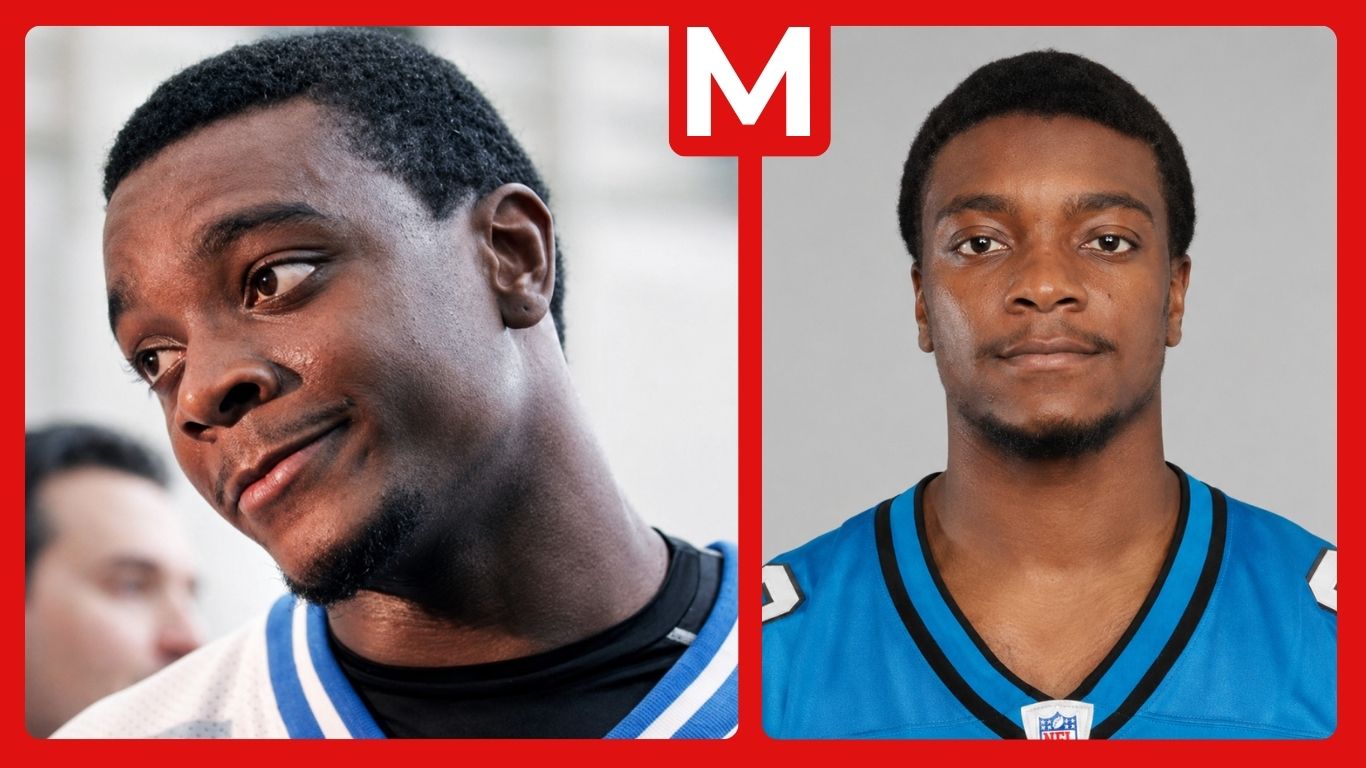
Charles Rogers Biography: The Life, Career, and Challenges of an NFL Standout tells the story of a man whose athletic gifts once promised to rewrite the history of professional football. In the world of sports, few names carry as much weight and “what-if” potential as that of Charles Rogers. Rising from the humble surroundings of Saginaw, Michigan, to the pinnacle of college football, his trajectory seemed destined for the Pro Football Hall of Fame. However, behind the flashing cameras and record-breaking statistics lay a narrative of immense pressure, physical fragility, and the personal battles that often shadow high-profile athletes. By exploring his journey, we gain a deeper understanding of the complexities faced by those who are catapulted into stardom, only to encounter hurdles that no amount of raw talent could easily clear.
The Legend of a Saginaw Phenom
The story of Charles Rogers begins in the streets of Saginaw, Michigan, a place where athletic prowess is often viewed as a golden ticket. As a young boy, Charles Rogers displayed a natural coordination and speed that set him apart from his peers. Growing up in a challenging environment, he learned early on that success required both grit and immense focus. His early life was marked by periods of uncertainty, including times spent living with his grandfather while his mother faced legal troubles. Despite these early obstacles, he turned to the field as a sanctuary. Football became his passion, his escape, and eventually, his path toward something greater than the circumstances into which he was born. This foundation of resilience would define his character, even as his future life took unexpected turns.
His reputation as a “can’t-miss” prospect was built during his time at Saginaw High School. He was not merely a football player; he was a multisport phenom who commanded respect on the basketball court and the track. Coaches recall him as a young man who possessed a unique blend of size, speed, and competitive fire that could change the outcome of a game in a single play. As a three-time all-state honoree, Charles Rogers became a local celebrity long before he stepped foot on a collegiate field. By the time he graduated, he had already shattered expectations, winning state titles in track and leaving an indelible mark on Michigan high school athletics. His journey from Saginaw was not just a pursuit of glory, but a testament to his innate desire to succeed.
Early Life and High School Dominance
The roots of success for Charles Rogers were deeply embedded in his local community. His upbringing in Saginaw was anything but conventional, requiring him to mature far faster than the average teenager. Living with his grandfather during his mother’s absence was a formative experience that instilled in him a sense of responsibility and self-reliance. When his mother returned to work night shifts during his high school years, he again leaned on family support to keep his eyes on the prize. This stability was crucial because it allowed him to channel his frustrations and ambitions into his performance. Every touchdown scored and every race won during these years was a stepping stone, a small victory in a much larger, personal war against the limitations of his environment.
His multisport prowess truly set the stage for his collegiate career. It is rare to find an athlete who excels equally in football, basketball, and track, yet Charles Rogers did exactly that. His state championship victory in the 400-meter dash is frequently cited as proof of his elite athletic profile, as he showcased a level of explosiveness that was simply impossible for most defenders to contain. This high school dominance was not accidental; it was the result of a tireless work ethic and an uncompromising belief in his own abilities. Scouts began to flock to Saginaw, recognizing that they were witnessing a rare talent. By the time he moved on to higher competition, the name Charles Rogers had already become synonymous with excellence, setting the bar incredibly high for his future.
College Glory: The Michigan State Years (2001–2002)
When Charles Rogers arrived at Michigan State University, he immediately set the Big Ten on fire. Wearing the green and white, he transformed from a promising recruit into one of the most prolific wide receivers in the history of college football. Over just two seasons, he accumulated staggering numbers that still stand as benchmarks for Spartan excellence. He broke the school record for most career touchdowns with 27, a feat that remains legendary among the Michigan State faithful. Watching him play was an exercise in awe; he had an uncanny ability to outjump multiple defenders, securing passes that seemed destined for incompletions. His performance wasn’t just about statistics; it was about his ability to dominate the game whenever the ball was in his hands.
The crowning achievement of his college career came in 2002 when he won the prestigious Fred Biletnikoff Award. As the nation’s top receiver, he was a unanimous All-American, a status that solidified his position as the most feared offensive player in the country. During this season, he famously broke Randy Moss’s NCAA record by catching a touchdown pass in 13 consecutive games. This period of his life was the pinnacle of his public success, where his talent seemed boundless and his future limitless. He wasn’t just a standout; he was a phenomenon. Even today, Spartan fans look back on those two years as a time when Charles Rogers put the program on the map, proving that a single player could change the identity of an entire team.
The 2003 NFL Draft: A High-Stakes Selection
The 2003 NFL Draft was a defining moment for Charles Rogers, as the Detroit Lions selected him with the second overall pick. Expectations were astronomically high, as the Lions were in desperate need of a franchise-changing offensive weapon. For a hometown hero to stay in Michigan to play for the Lions seemed like the perfect narrative. The city of Detroit embraced him, pinning their hopes for a revival on his shoulders. He walked into the league with the weight of an entire organization pressing down on him, carrying the label of a generational talent who was expected to dominate from his very first snap. The excitement surrounding his arrival was palpable, as fans dreamed of long touchdowns and playoff runs led by their new superstar receiver.
However, the pressure of being a high-stakes draft selection can be a burden that few fully comprehend until they are in the spotlight. Charles Rogers was tasked with turning around a struggling franchise, a job that requires not just physical skill but immense mental fortitude. While his transition to the professional level was highly anticipated, the harsh reality of the NFL was about to test him in ways that college football never had. Being the second overall pick meant he was constantly under the microscope, with every practice session and every game dissected by media and analysts. The dream that started in Saginaw reached a critical juncture, and the world was watching to see if he could truly become the centerpiece the Lions so desperately needed.
Professional Challenges: The Injury-Plagued NFL Career
The beginning of his professional tenure provided a glimpse of what could have been. In his NFL debut, Charles Rogers electrified the crowd with two touchdowns, proving that he could compete at the highest level. Yet, the momentum was short-lived. A broken clavicle sustained during practice shortly after that debut ended his rookie season prematurely, setting off a chain reaction of physical setbacks that would haunt him for the remainder of his career. Injuries are an unfortunate reality of football, but for Rogers, they were not just isolated incidents; they were career-altering events. The psychological toll of being sidelined during his most vital years of development cannot be overstated, as the rhythm and confidence needed to succeed at that level are difficult to regain once lost.
The recurrence of his clavicle injury during the 2004 season was a devastating blow to both the player and the organization. It essentially cost him two full years of growth, leaving him struggling to regain his timing and chemistry with his quarterbacks. Added to this were off-field suspensions, which further complicated his ability to find a groove in the professional game. The narrative surrounding his time in Detroit shifted from hope to frustration, as the “once-in-a-generation” talent was rarely available to take the field. These injuries and setbacks served as a harsh reminder of how fragile a professional career can be. For Charles Rogers, the dream was beginning to feel like a battle against his own body, a struggle that would eventually define his time in the NFL.
The “What If” Factor: Analyzing His Professional Tenure
When experts analyze the legacy of Charles Rogers, the conversation almost always drifts to the “what-if” factor. Despite playing in only 15 professional games, the flashes of brilliance he displayed—even when fighting through pain—left no doubt about his elite potential. If he had remained healthy, many believe he would have shattered NFL records just as he had done in college. Instead, he became a cautionary tale of how quickly a promising trajectory can be derailed. His career serves as a significant case study in the volatility of professional sports, where success is tethered not only to talent but also to the cruel luck of injury and the ability to navigate a high-pressure environment.
This sense of lost potential is what makes his story so enduringly tragic. Unlike players who never had the skills to make it, Rogers possessed all the tools of a superstar. When he was on the field, he was still a threat that required defensive schemes to be adjusted. Comparing his limited production to his collegiate dominance highlights the sheer gap between his projected career and the reality he faced. Supporters and critics alike remain fascinated by the “what could have been” scenario, often debating whether different coaching, health management, or circumstances could have led to a different outcome. Charles Rogers remains one of professional football’s most significant “what-if” stories, representing a talent that, due to unfortunate circumstances, never reached its full maturity in the professional arena.
Life After Football: Personal Struggles and Transitions
The transition away from the NFL was perhaps the most difficult phase of the life of Charles Rogers. When the game that defined him for so long was suddenly taken away, he was forced to grapple with a new reality that was far less structured and forgiving. His post-football life was marked by well-publicized financial and legal disputes, including a highly contentious conflict with the Detroit Lions regarding the repayment of his signing bonus. These public struggles, combined with private battles, added layers of difficulty to his journey. Navigating life outside of the cocoon of professional sports is a challenge for many players, but for someone whose identity was so heavily tied to his on-field success, the process was particularly arduous.
Beyond the financial and legal complications, he faced a deeply personal struggle with opioid dependency. This addiction, which stemmed from the pain management required for his recurring injuries, became a silent adversary that compromised his well-being. It is a story that brings to light the darker, often ignored side of player welfare: the long-term impact of prescription medication used to keep athletes in the game. His efforts to seek recovery and find stability in later years reflected his desire to overcome these hurdles. The path was never linear, but his willingness to face his demons was a crucial part of his final chapter, highlighting the human cost of a career built on physical sacrifice.
The Search for Redemption and Stability
In his later years, Charles Rogers moved away from the intense spotlight of Michigan to find peace in Florida. This transition was marked by a shift in priorities as he focused on his family and his eight children. Finding stability beyond the roar of the stadium is a monumental task, and for him, it involved a search for a new identity that was not defined by his past failures. He sought to create a life where he could be present for those who mattered most, attempting to leave the turbulence of his NFL years behind. This period of his life was about rediscovery and, in many ways, an attempt to find a sense of normalcy that had been elusive since he was a teenager.
This search for redemption was not just about correcting past mistakes; it was about the resilience of the human spirit. He worked toward maintaining his sobriety and building meaningful connections that weren’t predicated on his status as a former star. For many who knew him during this period, he was a man who genuinely wanted to turn the page. While the scars of his past remained, he pushed forward with a quiet determination to be better for himself and his children. His story in these years serves as a reminder that the journey of an athlete doesn’t end when the jersey is taken off; it merely enters a new, often more challenging, stage where the measure of success changes entirely.
Remembering Charles Rogers: A Complex Legacy
The legacy of Charles Rogers is as multifaceted as it is heartbreaking. To the Michigan State fan, he will always be the electric wide receiver who put on a show every Saturday, a legend who rewrote the school’s record books and brought joy to thousands. To the Detroit Lions fan, he remains a symbol of an era defined by frustration and unfulfilled promises. Yet, looking past these two extremes reveals a complex man who navigated the immense highs and profound lows of fame. Remembering him requires balancing his status as a collegiate icon with the genuine struggles he faced as a human being. He was a product of a challenging environment who fought to rise, only to be humbled by the unpredictable nature of his profession.
His impact on the Saginaw community and the wider Michigan football family remains significant. Even after his passing, those who grew up watching him continue to speak of his raw talent with a sense of wonder. He remains an idol for many young athletes in his hometown who look at his story and see both the incredible possibilities and the inherent dangers of the path to professional sports. By remembering him fully—both as the “Spartan warrior” and as the person struggling to find his way—we honor the totality of his life. His legacy is one that commands empathy, reminding us that every athlete is a complex individual whose worth extends far beyond the statistics of a game.
Conclusion
The untimely passing of Charles Rogers in 2019 at the age of 38 sent shockwaves through the sports world, serving as a solemn reminder of how short and fragile life can truly be. His story continues to resonate, not just as a cautionary tale for aspiring pros, but as an essential lesson in the need for holistic support systems for athletes. His life, career, and challenges represent a call to action for the sports community to better address the mental, physical, and financial health of those who put their bodies on the line. The memory of the former NFL standout lives on in the record books, but his true impact lies in the conversations he inspires about player welfare and the difficult transitions that occur after the final whistle.
Ultimately, Charles Rogers stands as a testament to the immense pressures of modern stardom and the resilience required to survive them. While his career may have been cut short, the passion he displayed during his time at Michigan State remains a bright spot in the university’s history. He was a young man from Saginaw who dared to dream big, and in doing so, he touched the lives of countless people. As we reflect on his journey, we are reminded of the importance of kindness, understanding, and the need to view athletes as more than just names on a stat sheet. His legacy is one that will continue to challenge, inform, and move us for years to come.
Read More: Phyllis Minkoff
FAQs
1. Who was Charles Rogers and why is he a notable name in football?
Charles Rogers was a legendary wide receiver at Michigan State University and a former first-round NFL draft pick. He is remembered as one of the most talented college receivers in history, known for his speed and record-breaking career before his NFL tenure was limited by injuries.
2. What made his college career at Michigan State so special?
He holds Michigan State records for most career receiving touchdowns (27) and won the Biletnikoff Award in 2002. His ability to dominate games and his unanimous All-American status made him a true icon for the program.
3. Why did his NFL career not reach the same heights as his college success?
His professional career was heavily hampered by recurring collarbone (clavicle) injuries, which sidelined him for most of his first two seasons. Combined with off-field issues, these physical setbacks prevented him from fulfilling the immense potential expected of the second overall pick.
4. What was the cause of his death?
Charles Rogers passed away in 2019 at the age of 38, with his cause of death attributed to liver failure and cancer.
5. How is Charles Rogers remembered today?
He is remembered as a complex figure: a once-in-a-generation talent who electrified crowds at Michigan State, but also as a man who faced significant personal and health struggles after his football career ended, serving as a reminder of the challenges professional athletes can face.
